EMT Practice Test

1. Question Content...


Question List

Question1: Refer to the exhibit.
The error occurs when a project is run in Anypoint Studio. The project, which has a dependency that is not in the MuleSoft Maven repository, was created and successfully run on a different computer.
What is the next step to fix the error to get the project to run successfully?

Question2: By default, what happens to a file after it is read using an FTP connector Read operation?

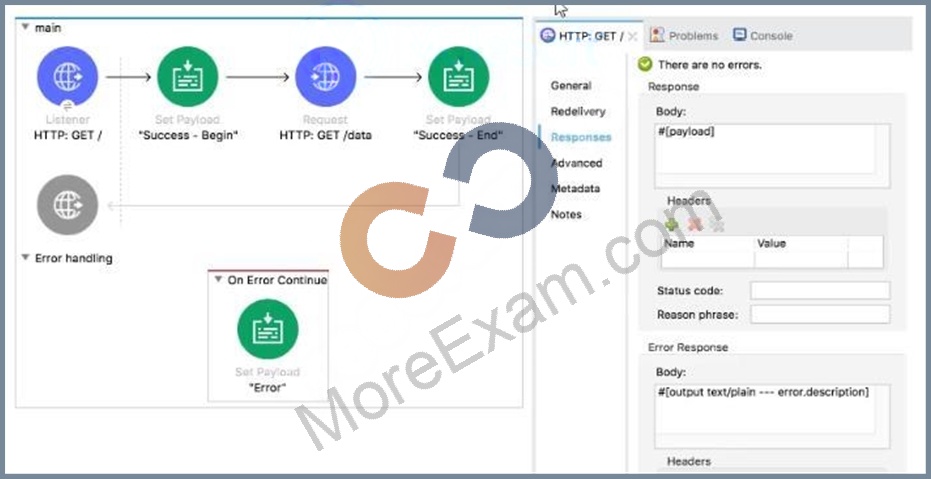
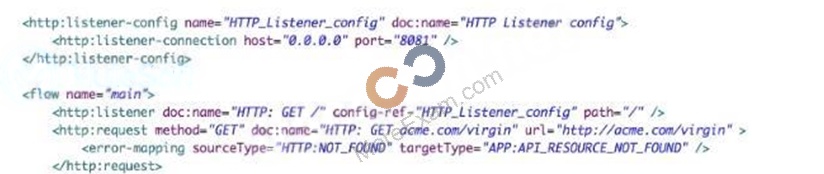
Question3: Refer to the exhibits.


A web client submits a request to the HTTP Listener and the HTTP Request throws an error.
What payload and status code are returned to the web client?
Refer to the exhibits. A web client submits a request to the HTTP Listener and the HTTP Request throws an error.
What payload and status code are returned to the web client?

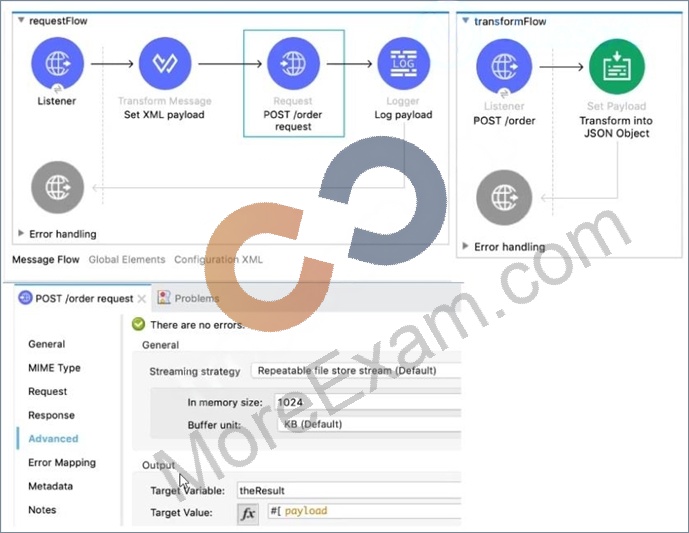
Question4: Refer to the exhibits.

In the requestFlow an HTTP Request operation is configured to send an HTTP request with an XML payload.
The request is sent to the HTTP Listener in the transform Flow.
That flow transforms the incoming payload into JSON format and returns the response to the HTTP request.
The response of the request is stored in a target variable named the Result.
What is the payload at the Logger component after the HTTP Request?

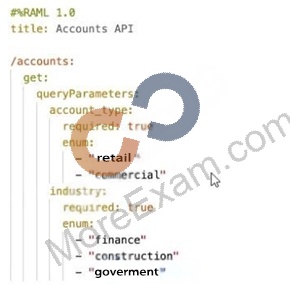
Question5: Refer to the exhibit.

This RAML specification includes a resource and method to retrieve accounts by account_type and industry.
What is the correct URI to get all retail finance accounts?

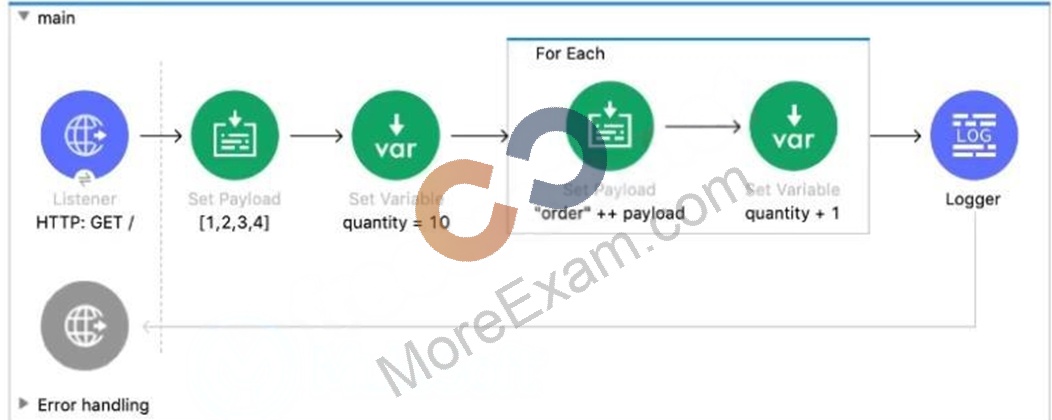
Question6: Refer to the exhibits.
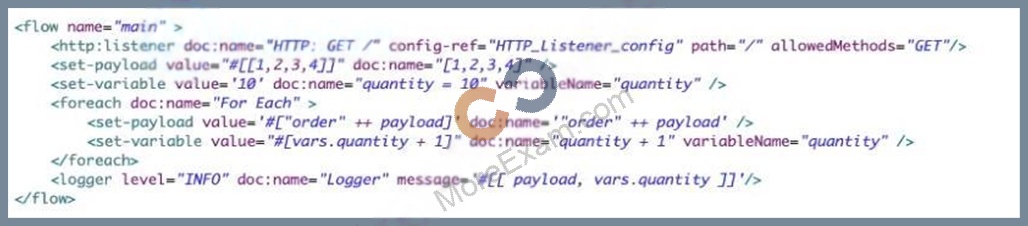

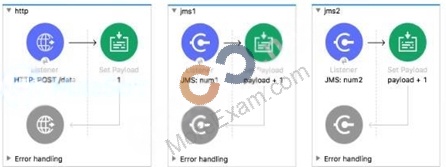
What payload and quantity are logged at the end of the main flow?

Question7: Refer to the exhibit. The main flow contains an HTTP Request in the middle of the flow. The HTTP Listeners and HTTP request use default configurations.
What values are accessible to the Logger at the end of the flow after a web client submit request to
http://local:801/order?color=red?

Question8: Refer to the exhibits.


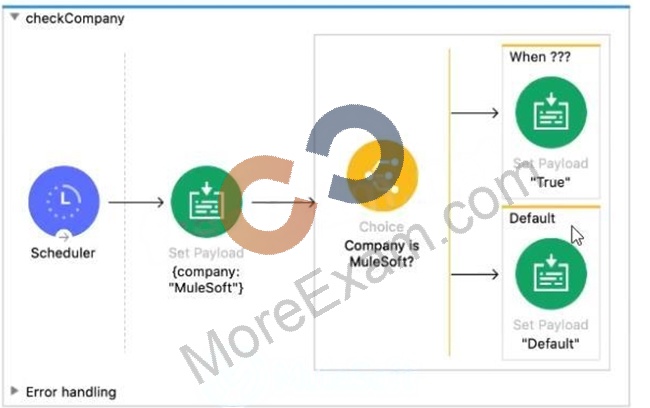
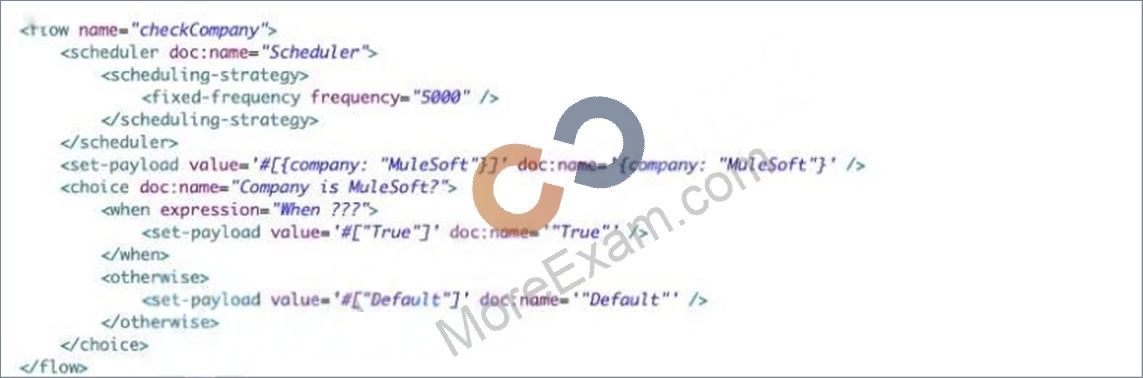
The <when> expression for the Choice router needs to be written.
What is a valid <when> expression to route Mule events to the non-default flow?

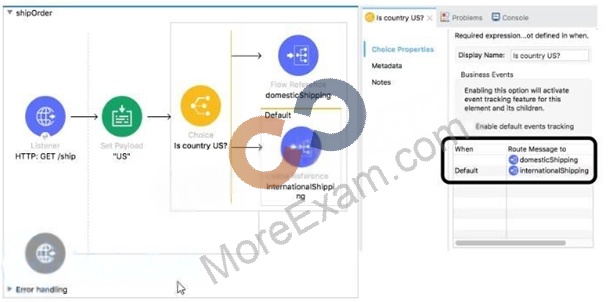
Question9: Refer to the exhibit.

What is a valid expression for the Choice router's when expression to route events to the documenticShipping flow?

Question10: A
web client submits a request to http://localhost:8081?flrstName=john. What is the correct DataWeave expression to access the firstName parameter?

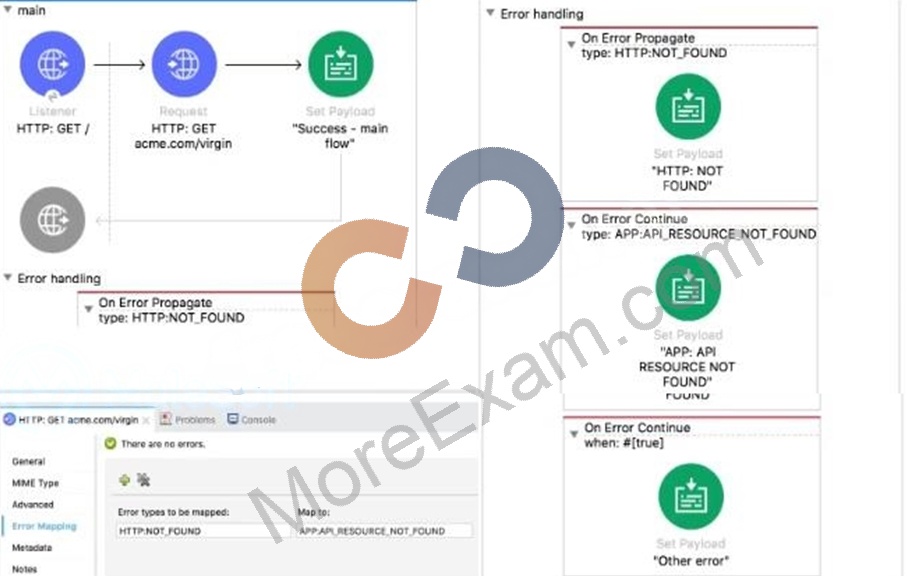
Question11: Refer to the exhibit.


The main flow is configured with their error handlers. A web client submit a request to the HTTP Listener and the HTTP Request throws an HTTP:NOT_FOUND error.
What response message is returned?''
What response message is returned?

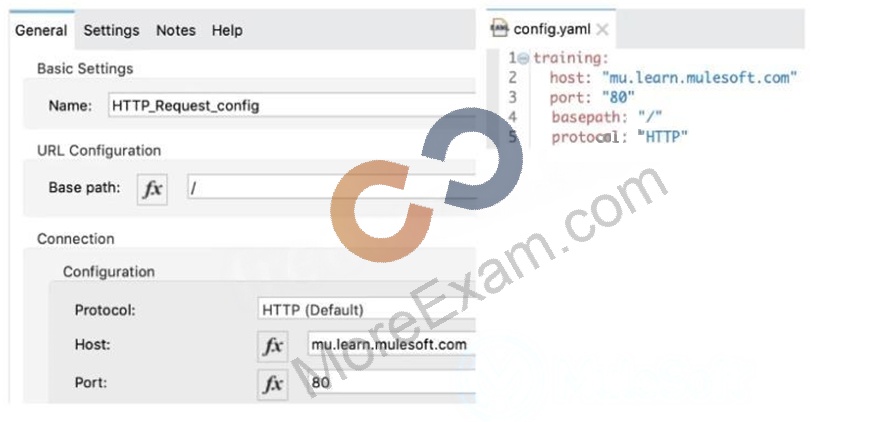
Question12: Refer to the exhibits.

A Mule application has an HTTP Request that is configured with hardcoded values. To change this, the Mule application is configured to use a properties file named config.yaml.
what valid expression can the HTTP Request host value be set to so that it is no longer hardcoded?

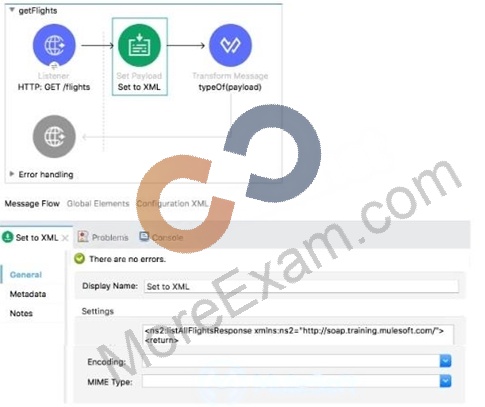
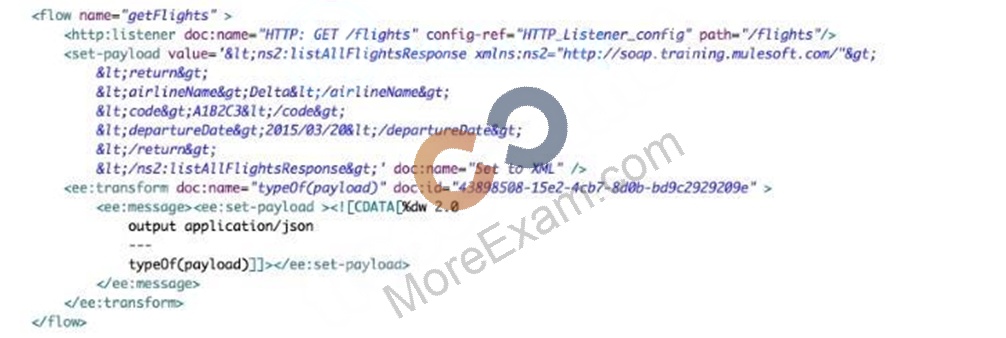
Question13: Refer to the exhibits.


A
web client submits a request to http://localhQst:8081 /flights. What is the result at the end of the flow?

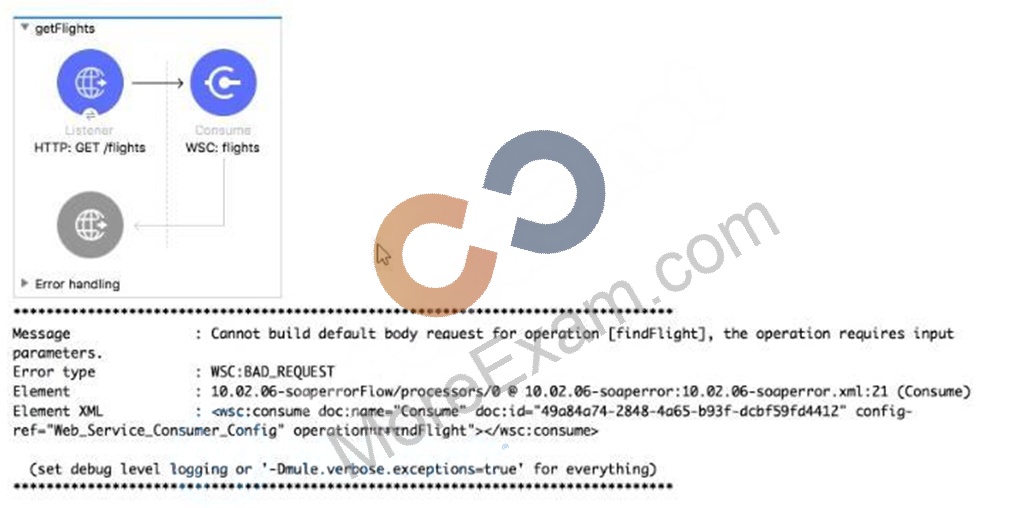
Question14: Refer
to the exhibits. A web client submits a request to http://localhost:8081/fliqhts?destination=SFO and the Web Service Consumer throws a WSC:BAD_REQUEST error.
What is the next step to fix this error?

Question15: Refer to the exhibit.

In the execution of the Scatter_Gather, the flow1 route completes after 10 seconds and the flow2 route completes after 20 seconds.
How many seconds does it take for the Scatter_Gather to complete?

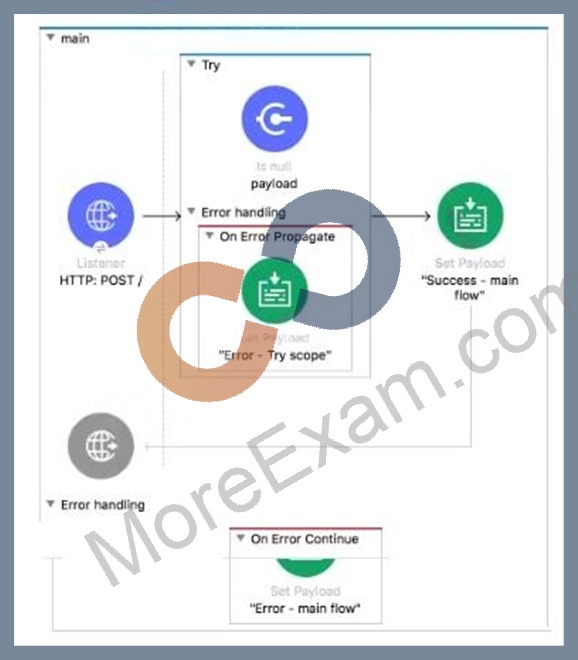
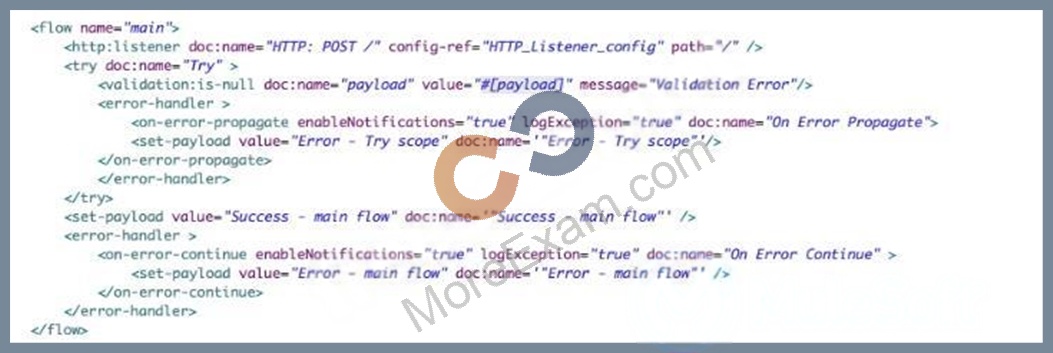
Question16: Refer to the exhibits.


The Validation component in the Try scope throws an error.
What response message is returned to a client request to the main flow's HTTP Listener?
The Validation component in the Try scope throws an error. What response message is returned to a client request to the main flow's HTTP Listener?

Question17: An app team is developing a mobile banking app. It took them two months to create their own APIs to access transaction information from a central database. The app team later found out that another team had already built an API that accesses the transaction information they need.
According to MuleSoft, what organization structure could have saved the app team two months of development time?

Question18: Refer to the exhibits. The main flow contains an HTTP Request in the middle of the flow. The HTTP Listeners and HTTP Request use default configurations.
A web client submits a request to the main flow's HTTP Listener that includes query parameters for the pedigree of the piano.
What values are accessible to the Logger component at the end of the main flow?

Question19: A
Mule application contains two HTTP Listeners, each configured for different API endpoints:
http://acme.com/apis/orders and http: //acme .com/a pis/customers.
What base path value should be set in an HTT? Listener config element so that it can be used to configure both HTTP Listeners?

Question20: What path setting is required for an HTTP Listener endpoint to route all requests to an APIkit router?

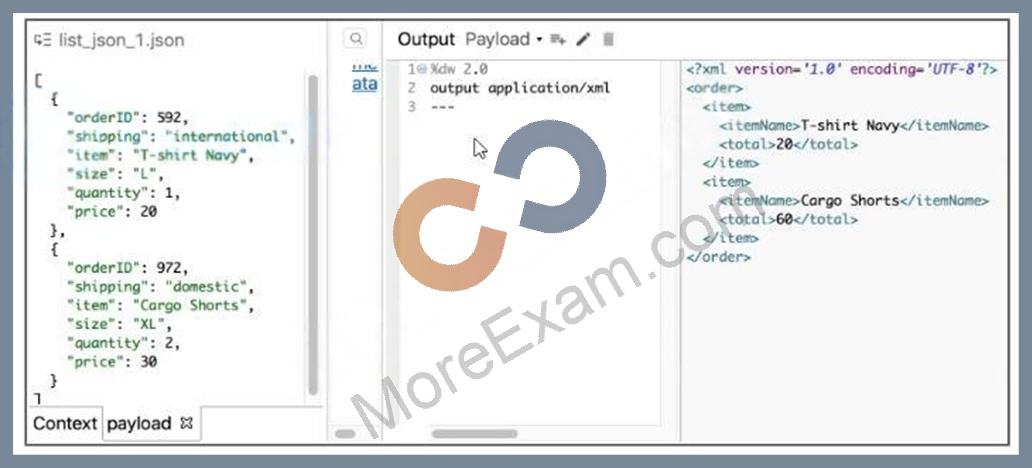
Question21: Refer to the exhibit.

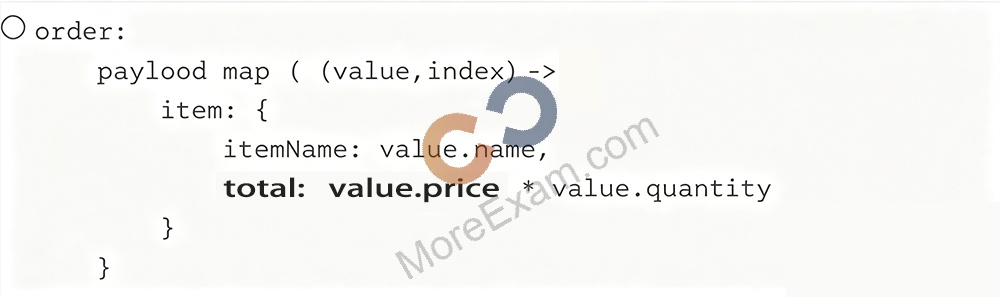
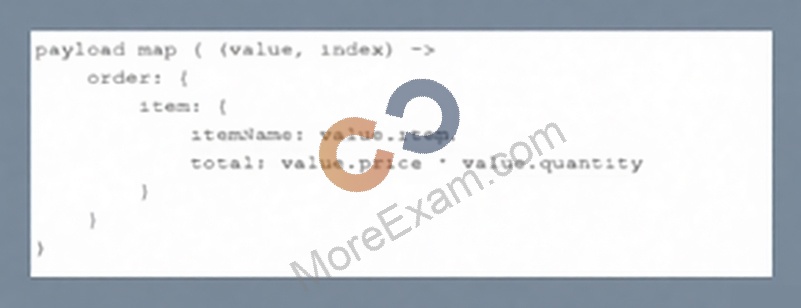
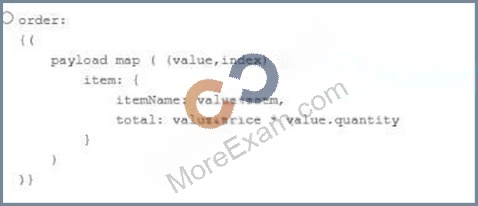
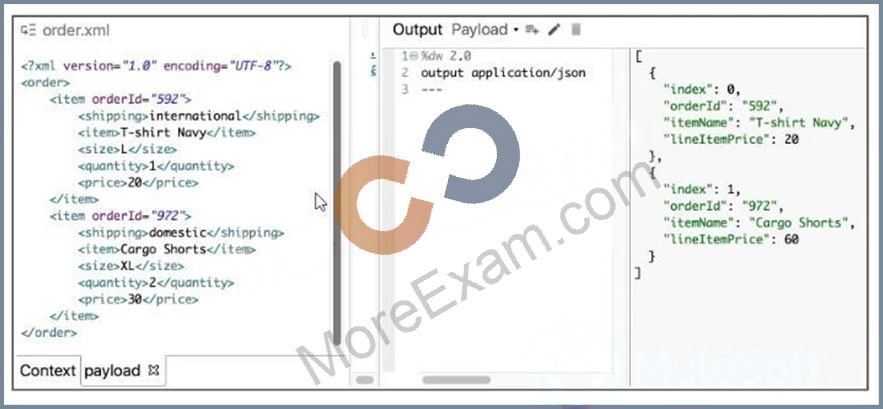
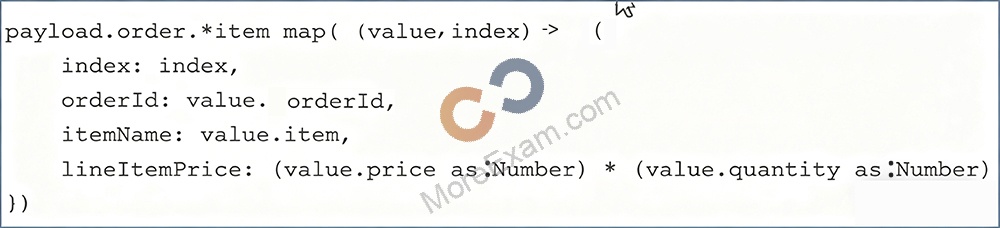
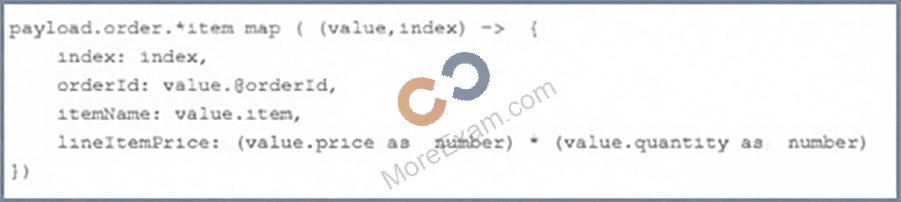
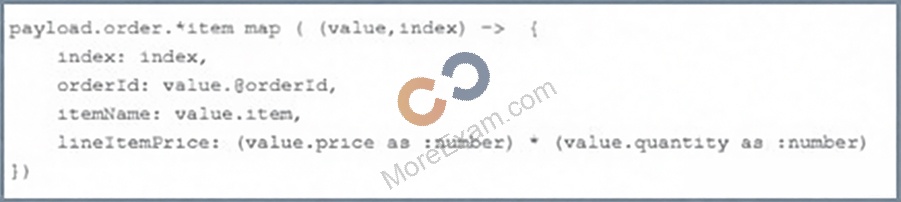
What Database expression transforms the input to the output?
A)

B)

C)

D)

Question22: Refer to the exhibit.
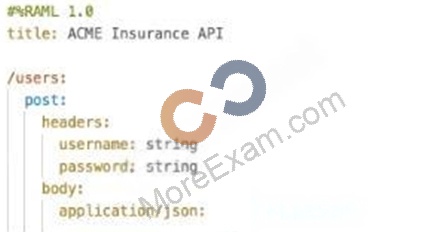
What is the correct way to create a user?
A)
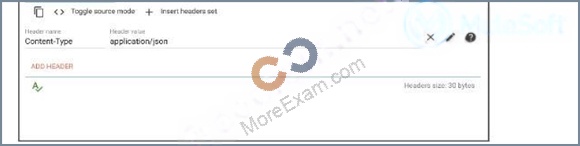
B)

C)
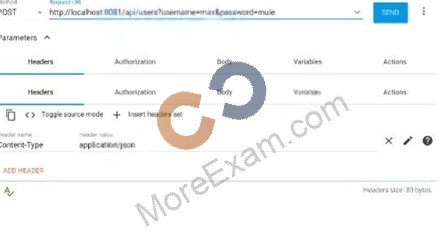
D)
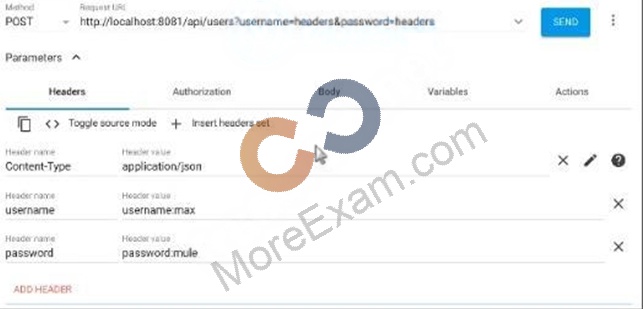
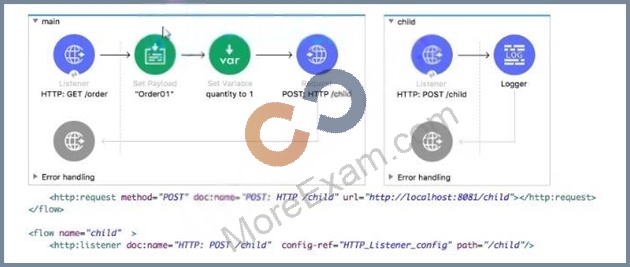
Question23: Refer to the exhibit.

The main flow contains a Flow Reference for the child flow.
What
values are accessible in the child flow after a web client submits a request to http://localhost:8Q81/order?
color=red?

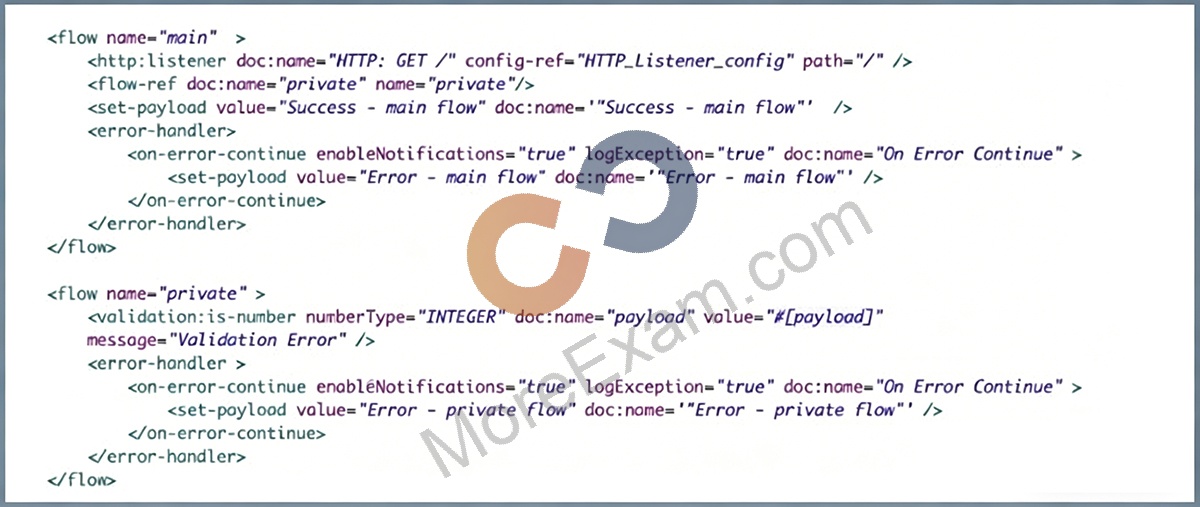
Question24: Refer to the exhibits.


The Validation component in the private flow throws an error. What response message is returned to a client request to the main flow's HTTP Listener?

Question25: Refer to the exhibit.


What payload is returned from a request to http//localhost.8081/
Refer
to the exhibits, what payload is returned from a request to http://localhost;8081/?

Question26: Refer to the exhibit.

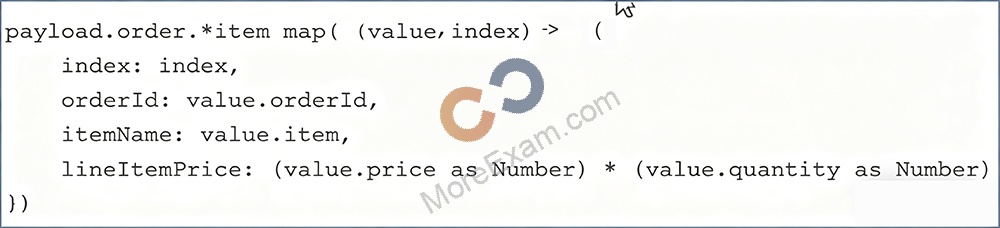
What Database expression transforms the input to the output?
A)

B)

C)

D)

Question27: Refer to the exhibit.
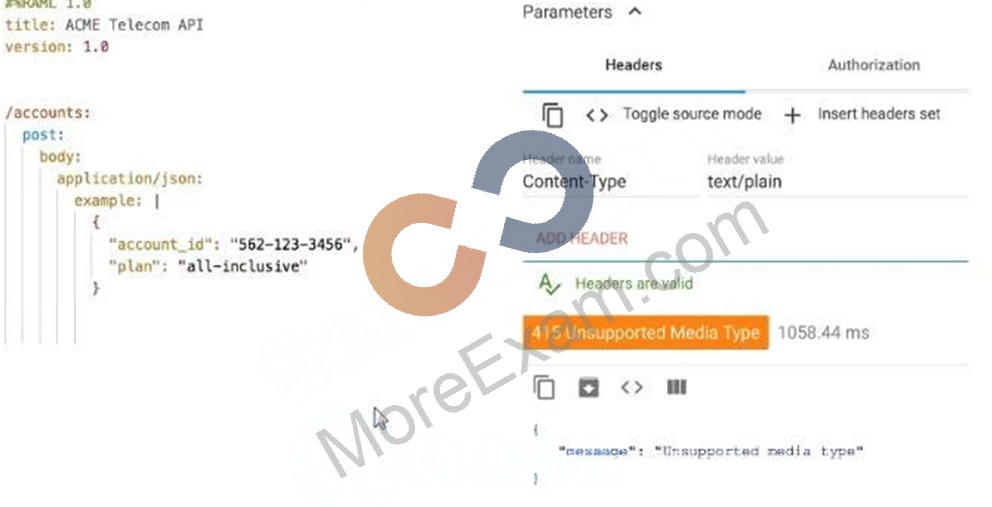
What should be changed to fix the 415 error?

Question28: An API specification is designed using RAML. What is the next step to create a REST Connector from this API specification?

Question29: Refer to the exhibit.

What is the correct DataWeave expression for the Set Payload transformer to call the createCustomerObject flow with values for the first and last names of a new customer?

Question30: Refer to the exhibit.

A Mule event is composed of a hierarchy of objects. Where in the hierarchy are variables stored?

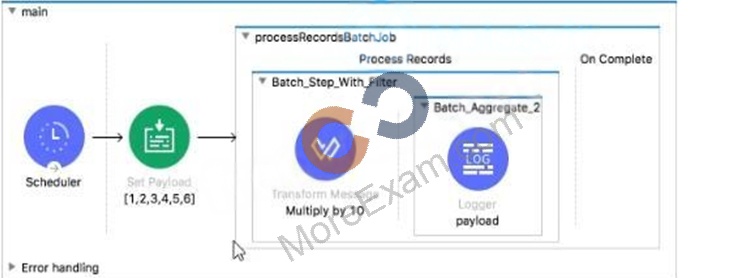
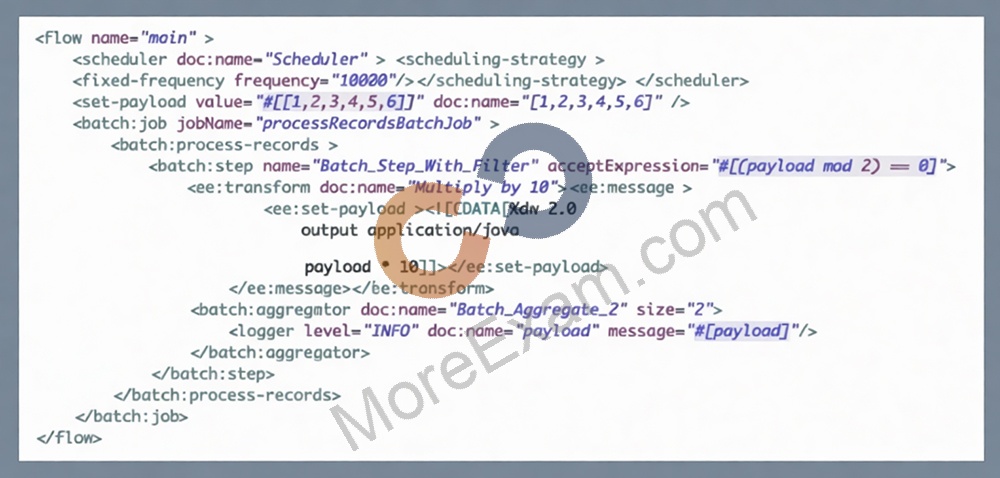
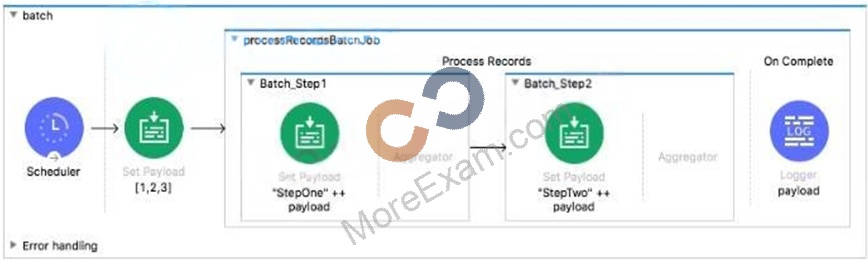
Question31: Refer to the exhibit. The Batch Job processes, filters and aggregates records, What is the expected output from the Logger component?

Question32: According to MuleSoft. what is the first step to create a Modern API?
Question33: To avoid hard-coding values, a flow uses some property placeholders and the corresponding values are stored in a configuration file.
Where does the configuration file's location need to be specified in the Mule application?

Question34: Refer to the exhibits.

The main flow contains an HTTP Request. The HTTP Listeners and HTTP Request use default configurations.
What
values are accessible in the child flow after a web client submits a request to http://localhost:8081/order? col or
= red?

Question35: A Mule flow has three Set Variable transformers. What global data structure can be used to access the variables?

Question36: Refer to the exhibit.

What is the output payload in the On Complete phase